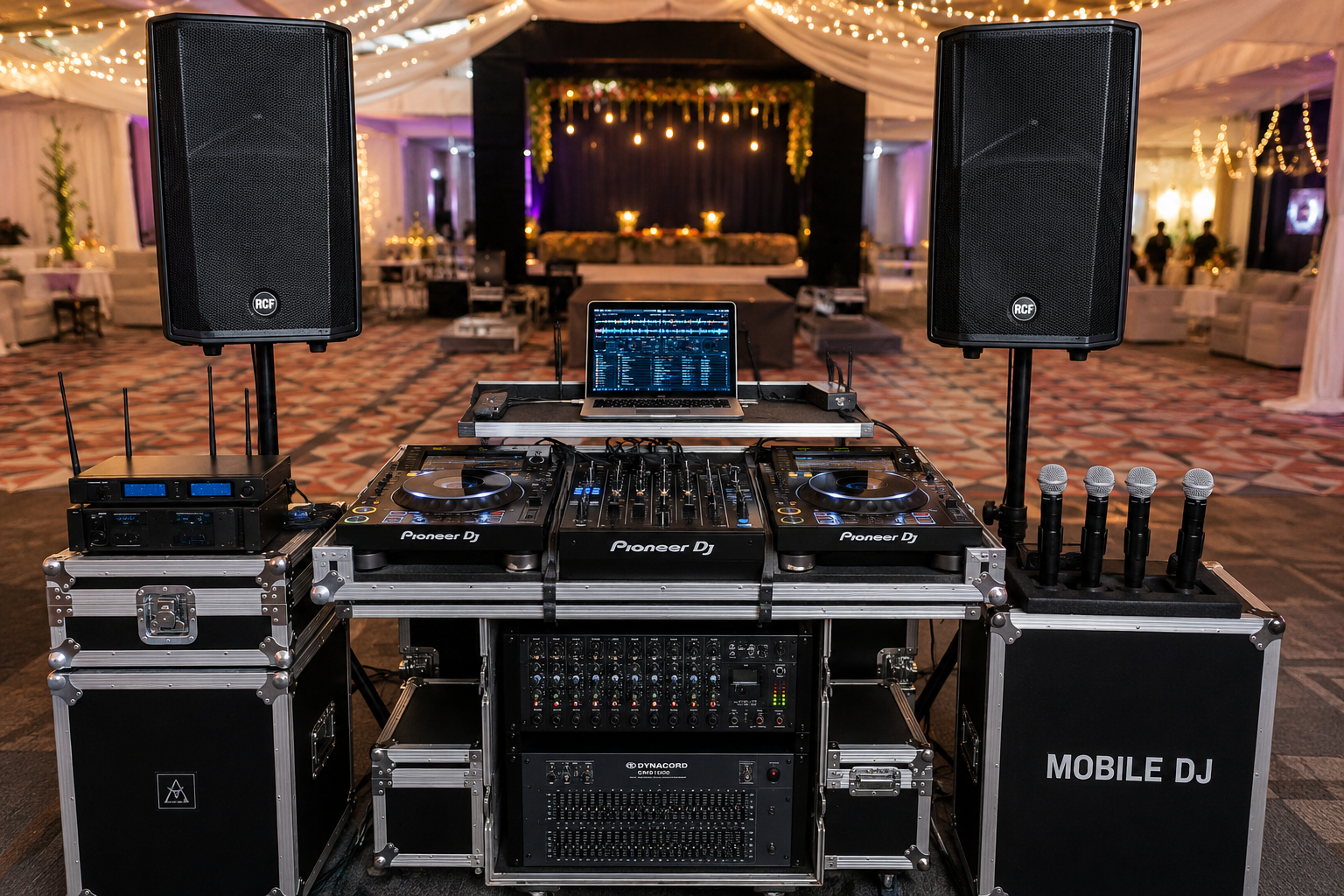
If you work as a DJ, your gear is your business. A damaged controller, stolen speaker, failed mixer, or broken microphone can stop a show and hit your income at the same time.
That is why this DJ Equipment Insurance Guide matters. It helps you understand what kind of protection is available, what it usually covers, what it may not cover, and how to choose a policy that matches the way you actually work.
For mobile DJs, wedding DJs, club performers, rental operators, and small event companies, insurance is not just about replacing equipment after a problem.
It is also about reducing risk when you move gear often, work at different venues, and depend on expensive items such as speakers, amplifiers, mixers, wireless microphones, laptops, lighting controllers, and PA systems. Whether you are based in India or the UK, the same basic question applies: if something goes wrong tonight, can your business recover quickly?
Product Overview
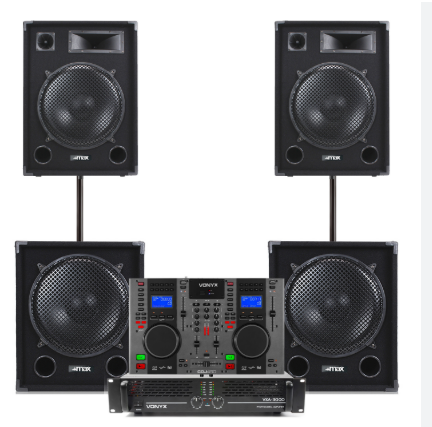
DJ equipment insurance is a type of audio equipment insurance or commercial equipment insurance that helps protect your gear and, in many cases, your business activities. It can include protection for theft, accidental damage, transport-related loss, fire, water damage, and sometimes public liability if your setup causes injury or property damage.
In real-world use, a proper DJ insurance policy may combine several parts:
- Equipment cover for your physical gear
- DJ liability insurance for injury or property damage claims
- Public liability insurance for DJs for venue-based events
- DJ business insurance for people who earn money from gigs
- Event equipment insurance for portable systems used at different locations
- Rental DJ equipment insurance if you hire gear in or rent gear out, depending on policy terms
This matters because DJ setups are rarely static. A home studio setup has one type of risk. A mobile DJ insurance setup that travels to weddings, school functions, outdoor programs, and corporate events has a very different risk profile.
Key Features to Look for in DJ Equipment Insurance
Not all policies are equally useful. A cheap policy can still leave you exposed if it excludes the exact risks you face every weekend.
1. Equipment Theft Cover
This is one of the first things DJs ask about. DJ equipment theft insurance usually covers stolen items such as:
- Controllers
- Mixers
- Amplifiers
- Speakers
- Subwoofers
- Wireless microphones
- Laptops
- Audio processors
- Cables and accessories in some cases
Check whether theft is covered only from locked premises, or also from vehicles and venues. Many claims fail because the theft location does not meet the insurer’s conditions.
2. Accidental Damage Cover
Accidental damage insurance for DJ equipment is useful if a speaker falls during load-out, a mixer gets liquid spilled on it, or a microphone is dropped and stops working. This is especially important for busy event work where gear is handled often.
3. Transit and Portable Equipment Cover
A lot of DJ gear gets damaged between gigs, not during them. Portable equipment insurance or inland marine insurance for DJ equipment is designed for equipment that moves from one place to another.
Despite the name, inland marine insurance has nothing to do with boats in normal DJ use. It simply means coverage for business equipment while it is in transit or used away from your main location.
If you regularly carry active speakers, power amps, flight cases, stands, and LED bars, this section of cover is often more important than basic indoor property cover.
4. Liability Cover
If a guest trips on your cable, a speaker stand falls, or your rig damages a venue floor, professional DJ insurance should ideally include liability cover. This is where public liability insurance for DJs becomes important, especially in the UK where many venues ask for proof before allowing setup.
5. Replacement Cost vs Actual Cash Value
This affects claim value more than most beginners realize.
- Replacement cost coverage aims to pay the amount needed to replace an item with a similar new one.
- Actual cash value insurance usually pays the current depreciated value, which can be much lower.
For a DJ with older but still useful gear, this difference can be huge. A five-year-old powered speaker may still work fine at events, but its depreciated value may not cover the cost of a proper replacement.
6. Worldwide or Regional Use
If you work in multiple cities, travel for destination weddings, or cover events outside your usual area, check where the policy applies. Some DJ insurance companies cover only one country or only gear stored at a declared address.
Specifications Table
Since this is an insurance article rather than a single hardware product review, the most useful “specifications” are policy features and decision points.
| Policy Element | What It Means | Why It Matters for DJs |
|---|---|---|
| Equipment Cover | Covers physical DJ gear against listed risks | Protects controllers, speakers, amps, mixers, mics, laptops |
| Theft Protection | Covers stolen gear under stated conditions | Important for mobile DJs and event transport |
| Accidental Damage | Covers sudden accidental breakage | Useful for active event work and frequent handling |
| Transit Cover | Covers equipment while moving between venues | Critical for mobile entertainment insurance |
| Public Liability | Covers third-party injury or property damage claims | Often required by venues and event clients |
| Business Use | Confirms the policy covers paid work | Essential for freelance and self-employed DJs |
| Replacement Basis | Replacement cost or actual cash value | Directly affects payout amount |
| Deductible / Excess | Amount you pay before insurer pays the rest | Affects premium and claim practicality |
| Territorial Limit | Where the policy is valid | Important for travel and destination gigs |
| Hired-in Equipment Cover | Covers rented gear you temporarily use | Helpful for larger events and backup systems |
| Exclusions | Situations not covered | Prevents claim surprises |
| Claim Documentation | Inventory, serial numbers, invoices, photos | Makes equipment damage claims easier |
What Does DJ Equipment Insurance Cover?
The answer depends on the policy, but most strong plans in this category may cover some mix of the following:
Equipment Types Commonly Covered
- Speaker insurance for tops, subs, active speakers, passive cabinets, and monitor speakers
- Amplifier insurance for power amplifiers and rack-mounted processing units
- Mixer insurance for analog mixers, digital mixers, DJ mixers, and controllers
- Microphone insurance for wired and wireless systems
- PA system insurance for complete sound setups
- Audio visual equipment insurance if your work also includes displays, projectors, or event presentation gear
Common Risks Covered
- Theft from approved locations
- Accidental damage
- Fire damage
- Water damage from sudden incidents
- Damage during transport, depending on terms
- Power surge damage in some policies
- Temporary equipment hire after loss in some cases
- Event cancellation insurance in broader business packages, though usually as a separate add-on
What Is Often Excluded
This is where many DJs make mistakes. Common insurance exclusions may include:
- Normal wear and tear
- Cosmetic scratches
- Mechanical breakdown without an insured event
- Unattended vehicle theft
- Damage caused by negligence
- Unlisted or undeclared items
- Theft without proof of forced entry
- Use outside the approved business category
- Rental activity if the policy covers only owner-operated use
If you also run hired sound systems, our guide on sound system maintenance and common failure points can help reduce avoidable claim situations on speakers, amplifiers, and cables.
[Content Image 1: DJ loading speakers, mixer case, and stands into a vehicle before an event]
Suggested ALT text: portable DJ gear transport and event equipment insurance for mobile DJs
Performance Analysis: How Insurance Works in Real DJ Scenarios
Insurance does not produce sound, but it affects whether your business can keep running when equipment fails or disappears. In that sense, its “performance” is about how well it protects your workflow.
Mobile DJ and Wedding Work
For weddings and private events, you often carry:
- 2 tops
- 1 or 2 subwoofers
- 1 controller or mixer
- 1 laptop
- 2 microphones
- Amplification or active speaker electronics
- Stands, cables, DI boxes, and cases
This is exactly where mobile DJ insurance and wedding DJ insurance make sense. The risk is not only theft. It is loading, unloading, guest interaction, weather surprises, and venue accidents.
Outdoor Programs and Seasonal Events
Outdoor events add extra exposure:
- Moisture
- Dust
- Unstable power
- Temporary stages
- Public access around cables and speakers
In these cases, insurance should work together with practical planning. If you run outdoor events, our article on generator sizing for DJ setups is worth reading because poor power planning can damage amplifiers, active speakers, and mixers.
Club and Residency DJs
If you mostly use venue equipment and carry only a laptop, controller, and headphones, your needs may be smaller. You might need less equipment cover but still need professional DJ insurance and liability protection if you perform under your own business name.
Sound Rental and Event Production Use
If your business rents out gear, not every standard DJ insurance policy will cover that. Rental use increases risk because other people handle the equipment.
In that case, look specifically for sound rental insurance, commercial audio equipment insurance, or a policy that clearly allows hired-out gear.
This also matters when matching expensive systems for events. If you are building a larger rig, our amplifier and speaker matching guide can help you avoid stress on speakers and amps that leads to preventable damage.
Build Quality, Connectivity, and Why They Still Matter for Insurance
Insurance is not only about paperwork. The type of equipment you own changes your risk and your premium.
Build Quality
Gear with metal chassis, strong handles, proper flight cases, and known brand support usually survives transport better. For example:
- Plastic consumer speakers may be cheaper to replace but fail more easily in transport
- Rack-mounted amplifiers in padded cases are safer than loose units
- Wireless microphones need careful storage because capsules and antennas are easy to damage
A good insurer may not ask about every detail, but these factors affect claim frequency and replacement value.
Connectivity and Accessory Risk
Modern DJs carry more than speakers and mixers. They also carry:
- USB controllers
- Audio interfaces
- Wireless receivers
- Power sequencers
- Signal processors
- Tablets and laptops
- XLR, Speakon, RCA, and power cables
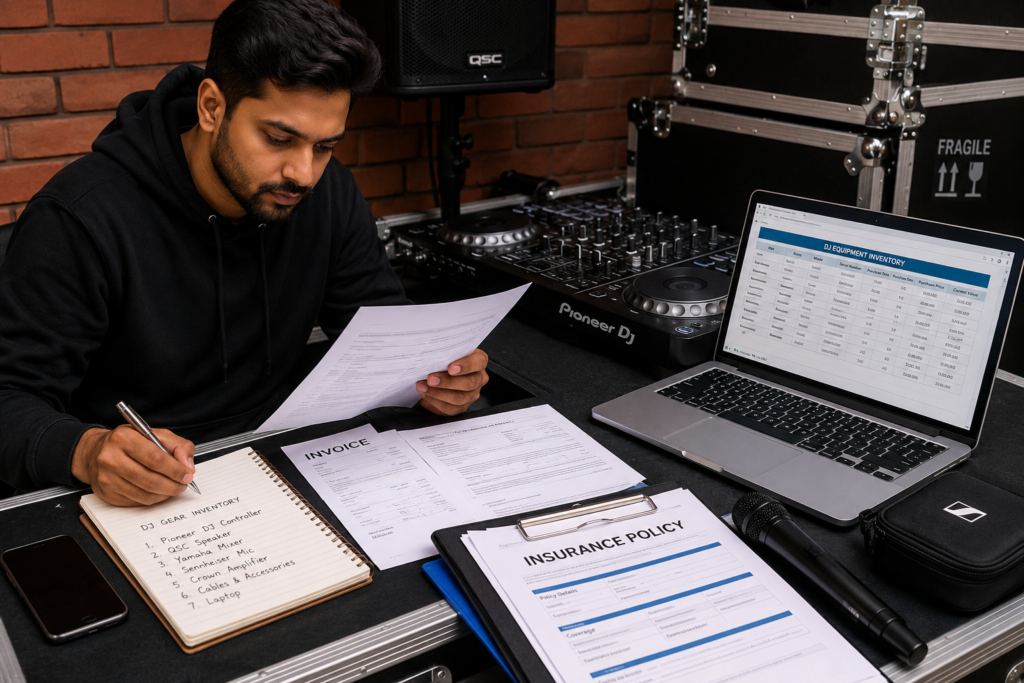
These items are easy to overlook during policy setup. A complete equipment inventory for insurance should include model names, serial numbers, photos, invoices, and replacement estimates.
If you are not sure what should be listed, our DJ setup cost guide can help you break down every item in a working mobile setup, including smaller accessories people often forget to insure.
Advantages and Disadvantages
Advantages
- Protects expensive gear that would be difficult to replace in one payment.
- Supports business continuity after theft, damage, or transport loss.
- Helps win venue bookings where liability cover is required.
- Reduces stress for self-employed and freelance DJs who depend on every weekend’s income.
- Can cover more than sound gear, including microphones, laptops, lighting control gear, and accessories.
- Useful for beginners and professionals alike, especially if the system leaves the house regularly.
Disadvantages
- Premium costs add up, especially for higher-value systems.
- Not every policy covers every scenario, especially vehicle theft or rental use.
- Claims need documentation, so poor record-keeping can become a problem.
- Deductibles can make small claims pointless if the excess is too high.
- Cheap policies may have narrow coverage, which looks fine until a real loss happens.
Price Information and DJ Equipment Insurance Cost
DJ Equipment Insurance Cost depends on several things:
- Total value of the equipment
- Whether the gear is used professionally
- Storage conditions
- Claims history
- Type of events you do
- Country and insurer
- Whether you add liability cover
- Whether you choose replacement cost or actual cash value
- Deductible amount
- Whether you need worldwide or transit cover
Typical Pricing Factors
For a small beginner setup, the cost may stay manageable if you insure only core items. For larger mobile rigs with subs, active tops, wireless microphones, and laptops, the DJ insurance premium rises because transport and event exposure rise too.
A basic solo DJ policy may be enough if you carry one controller and play in controlled indoor venues. A full DJ business startup insurance package makes more sense if you run weddings, school functions, outdoor shows, or equipment rentals.
Value for Money Analysis
Is DJ equipment insurance worth it? Usually yes, if any one of these is true:
- Replacing your gear would strain your finances
- You work for paid events regularly
- You travel with your system
- Venues ask for liability proof
- Your gear includes high-value items such as wireless systems, laptops, DSP speakers, or premium mixers
It may be less urgent if your setup is very small, never leaves home, and is not used commercially. Even then, home insurance may not properly cover business-use electronics, so it is worth checking.
Buying Advice: How to Choose the Best DJ Equipment Insurance
The best DJ equipment insurance is not always the cheapest one. It is the one that fits your real work pattern.
Step 1: List Everything You Actually Use
Include:
- Speakers
- Amplifiers
- Mixers and controllers
- Microphones
- Laptops
- Cases
- Processors
- Lighting controllers if relevant
- Cables and stands if covered
Many claims become difficult because people remember only the expensive main boxes and forget the supporting items.
Step 2: Decide If You Need Business and Liability Cover
If you play paid events, look beyond simple electronics insurance. You may need:
- DJ business insurance
- DJ liability insurance
- Public liability insurance for DJs
- Mobile entertainment insurance
This is especially important for venues, weddings, schools, hotels, and corporate jobs.
Step 3: Check Theft Rules Carefully
Ask:
- Is theft from a vehicle covered?
- Does the vehicle need forced entry?
- Is overnight storage in a vehicle excluded?
- Are open-air events treated differently?
- Is unattended gear covered backstage?
These details matter more than promotional wording.
Step 4: Understand the Deductible
An insurance deductible explained in simple terms: it is the amount you pay yourself before the insurer pays the rest. A higher deductible usually lowers your premium, but it also makes small claims less useful.
Step 5: Choose the Right Claim Basis
If budget allows, replacement cost coverage is often better than actual cash value insurance, especially for working professionals who need replacement quickly to keep taking bookings.
Step 6: Compare the Quote, Not Just the Price
When reviewing a DJ insurance quote, compare:
- Total equipment limit
- Single item limit
- Theft cover rules
- Accidental damage terms
- Liability amount
- Transit cover
- Territorial range
- Exclusions
That gives you a fair view of real value, not just headline cost.
If you are still building your rig, our microphone buying guide for live events and speaker impedance guide can help you choose equipment that suits your event size before you decide how much cover you need.
Full Specifications in Practical Buying Terms
Here is a simple checklist of what a strong DJ insurance coverage setup should ideally include for most working DJs.
| Area | Recommended Check |
|---|---|
| Business Use | Confirm paid DJ work is covered |
| Portable Use | Confirm gear is covered at venues and in transit |
| Theft Cover | Check forced entry and vehicle conditions |
| Damage Cover | Confirm accidental damage is included |
| Liability | Add public liability if working events |
| Claim Value | Prefer replacement basis if possible |
| Inventory Support | Keep photos, serial numbers, and invoices |
| Special Uses | Declare rentals, subcontracting, or destination events |
| Policy Limits | Make sure total cover matches actual replacement value |
Who Should Buy It?
Best for
- Mobile DJs carrying equipment to weddings, birthdays, and private events
- Freelance DJs who rely on regular paid shows
- Self-employed DJs with business income linked to their setup
- Event organizers who own portable PA systems
- Sound operators carrying mixers, microphones, and amplifiers across venues
- Rental businesses using dedicated sound system insurance or event equipment insurance
May Not Need a Full Policy
- Hobby DJs who only mix at home
- Club DJs who use mostly venue-owned gear
- Beginners with very low-cost equipment and no paid events
Even then, it is smart to review whether your existing household or business property insurance covers business-use electronics. Often it does not.
Frequently Asked Questions
1. What does DJ equipment insurance cover?
It usually covers theft, accidental damage, fire, transport-related risks, and sometimes liability, depending on the policy. The exact cover depends on whether you choose equipment-only protection or a broader DJ business insurance package.
2. Is DJ equipment insurance worth it for beginners?
Yes, if you are already doing paid events or carrying your setup outside home. Even a modest controller, speaker pair, microphone set, and laptop can represent a serious replacement cost.
3. Does DJ equipment theft insurance cover items stolen from a car?
Sometimes, but only under specific conditions. Many insurers require forced entry, hidden storage, and no overnight unattended vehicle storage.
4. What is the difference between DJ equipment insurance and public liability insurance for DJs?
DJ equipment insurance protects your gear. Public liability insurance for DJs helps if someone claims injury or property damage caused by your setup or operation.
5. Can I insure speakers, amplifiers, mixers, and microphones under one policy?
Usually yes. A good audio equipment insurance policy can cover a full working setup, including speaker insurance, amplifier insurance, mixer insurance, and microphone insurance, as long as the items are declared properly.
6. How can I lower my DJ insurance premium?
You may reduce cost by improving storage security, using proper flight cases, increasing the deductible, keeping a clean claims history, and insuring only gear that truly needs cover.
7. Does rental DJ equipment insurance work the same as standard cover?
Not always. Standard policies often focus on owner-used gear. If you rent equipment to others or hire gear for jobs, make sure the policy specifically allows that use.
8. How do I make equipment damage claims easier?
Keep an updated inventory with serial numbers, invoices, clear photos, and estimated replacement values. Report incidents quickly and keep venue or police records when relevant.
Final Verdict
This DJ Equipment Insurance Guide comes down to one practical point: if your gear earns money, it needs proper protection.
For most working DJs, DJ Equipment Insurance is less of an extra expense and more of a basic operating cost. A single theft, transport accident, or damaged speaker can cost more than months of premiums.
The right policy should match how you work, where you travel, what equipment you carry, and whether you need liability protection for venues and public events.
If you compare coverage carefully, keep a proper inventory, and understand the exclusions before buying, you give yourself a much better chance of staying operational when something goes wrong.
2 thoughts on “DJ Equipment Insurance Guide: What DJs Need to Cover, What It Costs, and How to Choose the Right Policy”